Chapter Twelve: The Crossing
The first thing Elias noticed was the sound of rain.
Not the frantic kind that beats against glass, but the softer rhythm of it—steady, patient, like fingers drumming on an old tin roof. He opened his eyes slowly, the world returning in fragments: the dim tawny light from a shaded lamp, the smell of coffee and antiseptic, the faint creak of wooden floors beneath footsteps.
He couldn't recognize where he was.
He tried to sit up, and pain lanced through his left arm. A hiss escaped his teeth. The bandage was clean, tight. Someone had changed it.
“Easy.”
The voice came from across the room.
Naomi stood by the window, half-hidden by the pale curtain, watching the rain trace thin rivers down the glass. She was wearing a loose sweater, her dark hair damp from a shower. Her posture was relaxed, almost calm—too calm for someone who had nearly died.
Elias blinked, his mind catching up to what his eyes were telling him. “Naomi?”
She turned, and for a heartbeat, he forgot how to breathe.
The last time he’d seen her, she’d been slumped in the boat's tight cabin, her cold, blood-slicked hand slipping from his. Now, the color had returned to her skin. Her eyes were clear, alert. The wound—the gunshot that had torn through her chest—was gone, hidden beneath fabric and shadow as if it had never existed.
He pushed himself upright, ignoring the dull pull in his arm. “How long…?”
“Two days,” she said softly. “You were out cold when we reached Kingston. Fever, shock—Reina was starting to think we’d lose you.”
Elias glanced around the room. It wasn’t much—an old safehouse, by the looks of it. Pine-paneled walls, a small wood stove, two narrow beds. A pile of equipment cases near the door. A faint smell of river mud clinging to everything.
“Where are the others?”
“Out,” Naomi said. “Reina and Valerie went to check the car, Marcus and Julian are securing supplies. We’re staying off-grid until it’s safe to move west.”
He nodded slowly. The rain outside blurred the faint outlines of trees, rooftops, and the grey gleam of water beyond. Kingston, he thought. They made it. Canada.
His gaze drifted back to Naomi.
She moved to the small table, pouring coffee from a dented metal thermos into two cups. Her motions were steady, practiced—not at all like someone recovering from a bullet wound.
He couldn’t look away.
“You should drink,” she said, setting one of the mugs beside him. Steam rose in small curls between them.
He didn’t touch it. “Naomi,” he said, voice low. “You were shot. I saw it.”
“I know.”
“I watched you bleed out. You stopped breathing.”
She held his gaze for a moment, then looked away, wrapping her hands around her cup. “And yet, here I am.”
He stared at her, waiting for the rest—a joke, a rational explanation, anything to make the world make sense again. But she said nothing.
The silence between them was filled only by the rain.
“How?” he finally asked.
Naomi’s lips curved, not quite a smile. “That’s a longer story than you’re ready for right now.”
“Try me,” he said, his voice low and frayed at the edges.
“No,” she said quietly, “now is not the time.”
Her tone wasn’t condescending—it was something else, something that sounded like sorrow.
He leaned back against the headboard, exhaustion and confusion warring behind his eyes. “So what am I supposed to believe, then? That you just… healed overnight?”
“You can believe whatever helps you sleep.”
“That’s not an answer.”
“No,” she said, sipping her coffee, “but it’s the truth for now.”
The wood stove popped, a faint ember glow spilling through the small grate. Outside, the rain eased into drizzle.
Elias exhaled, rubbing his temple. “Reina knew, didn’t she?”
Naomi met his gaze, unflinching. “Of course she did. She’s one of us, Elias. You were the only one who didn’t.”
The words settled like dust between them—quiet, inevitable. He wasn’t angry, not really. Just aware now that the room had always held more truth than he’d been allowed to see.
For a while, neither spoke. The rain faded to a whisper against the windows. Elias took the coffee finally, its warmth grounding him.
He studied her across the table. Something had shifted in her—a stillness that wasn’t just calm but deliberate, like someone who had made peace with a secret too heavy to share.
When he spoke again, his voice was quieter. “I thought you were gone. In that car, I—” He stopped himself, the memory cutting too close. “I thought I’d lost you.”
Naomi’s expression softened. “You didn’t.”
“Not yet,” he murmured.
Her eyes flicked up to meet his, and something unspoken passed between them—not comfort, not gratitude, but understanding. The kind that only comes after death has brushed too close.
A knock at the door broke the stillness. Valerie stepped in, her jacket dripping with rain. “You’re awake,” she said, relief flickering across her face. “Good. You had us worried.”
“Guess I’m stubborn,” Elias said, setting the mug aside.
Valerie glanced between him and Naomi. “How’s the arm?”
“I’ll live.”
“Good. Because we can’t stay here long.” She dropped a folder onto the table, water still beading on its cover. “Local chatter says someone’s been asking questions across the border. Private security types—likely al-Rashid’s men. They don’t know where we are yet, but we can’t push our luck.”
Naomi folded her arms. “When do we move?”
“Tonight. I’ve arranged a plane out of Toronto, but it’ll take time to prep clearance. Until then, we lay low. No calls, no signals.”
Elias nodded absently, but his focus lingered on Naomi. Her composure didn’t waver, not even at the mention of pursuit.
After Valerie left, the room fell quiet again. Naomi gathered the mugs, rinsed them in the sink. Elias watched her, the movement of her hands, the faint shimmer of light catching her hair.
“You don’t even look tired,” he said finally.
She glanced over her shoulder. “Would it help if I pretended?”
He didn’t answer.
Naomi dried her hands on a towel and leaned against the counter. “You’ve seen war, Elias. You know what the body can endure when it has to.”
He shook his head. “No. Not like this. I’ve seen people die from less.”
She hesitated, then crossed the small space between them. “You don’t have to understand it yet. Just trust that it’s real.”
He looked at her—really looked—and for the first time, he noticed it: a faint trace of light pulsing beneath her skin, subtle as a heartbeat. He blinked, and it was gone.
“Naomi,” he said quietly. “What are you?”
Her expression didn’t change. “Someone who still has a purpose. And someone who needs you to stay alive long enough to find yours.”
The words landed heavier than he expected.
She turned away before he could speak again, her voice drifting back to him like a whisper. “Get some rest. We have an ocean to cross.”
Elias sank back onto the bed, staring at the ceiling. The shadows shifted with the rainlight. His body felt heavy, but his mind refused to quiet. He felt the dull, throbbing ache in his arm and struggled to account for the two days he had lost. His memory offered only fragmented images: the moments just before the silence—the blinding muzzle-flash, the scent of burning metal...
His eyes fell to the small table beside the bed. Sitting on a crisp white napkin, clean and gleaming, was his wedding ring.
He had last felt it on his finger when the bullet grazed his arm, its coolness immediately lost beneath the rush of iron-smelling blood.
He reached out a heavy arm, the muscles protesting as he stretched for the ring. The metal was cool and familiar as he slipped it back onto his finger, a tangible weight returning to his life. The simple band felt like the only real thing in the room, a silent, persistent link to Clara and the world he had left behind.
He closed his eyes, his mind replaying the chaos of the shooting, the blood, and the sudden fear of loss. That night he thought he'd lost Naomi, too—but here she was. Breathing. Whole.
By the time he drifted into sleep again, the only thing he was sure of was this: Naomi Han was no ordinary woman.
Elias woke to the smell of rain and the murmur of voices.
For a moment he thought he was dreaming—the low rhythm of conversation, the clatter of plates, the faint scent of coffee and wood smoke drifting through the small house. Then he opened his eyes and saw the lamplight, the shadows moving on pine walls, and remembered where he was.
The safehouse.
He shifted, grimacing at the pull in his arm. The bandage was clean again—someone had changed it while he slept. A dull ache ran from shoulder to wrist, but the fever was gone. His mind felt clearer, steadier. The kind of stillness that only came after days of chaos.
“Look who’s alive.”
Marcus’s voice came from the doorway. He leaned against the frame, jacket unzipped, a grin ghosting across his face. Behind him, Julian’s tall shape moved through the kitchen, helping Valerie unpack something that smelled like stew.
Elias sat up slowly. “What time is it?”
“Dinner time,” Marcus said. “A quick bite, then we pack and move.” He motioned toward the other room. “Valerie is already setting the table. Come on—if you wait too long, Julian won't leave you anything.”
When Elias stepped into the main room, warmth hit him first—the stove burning steady, the windows fogged by the difference between cold rain outside and firelight within.
Reina hunched on a wooden crate, sorting through a pile of maps and printouts spread on the floor before her. Julian was carrying steaming bowls to the table. Valerie stood at the counter, her dark hair catching the stove light, sleeves rolled up as she ladled the last of the stew into a bowl.
Naomi was there too. She looked up when Elias entered, her expression easing into a quiet smile. “You’re awake.”
“Seems to be my new habit,” he said.
Reina rose, brushing off her hands. “We were worried sick. Next time you decide to get shot, try to schedule it better.”
“Noted.” He took the chair Marcus pulled out for him and sat, feeling the simple relief of being surrounded by familiar faces, and the profound comfort of having them all right there, safe and alive.
Valerie set a steaming bowl of stew firmly in front of him. “Eat before it gets cold. You need this to regain your strength.”
The food was simple—beans, potatoes, something that might once have been beef—but it was warm. The conversation around him was low and easy, bits of laughter threading through stories about their drive from New York to Clayton—the broken GPS, the storm that nearly swamped their van, Marcus insisting on playing 80s rock at full volume until Valerie threatened to throw the speaker overboard.
It felt almost normal.
When they were done, Reina pushed her bowl aside and spread a map over the table. “We move tonight,” she said. “Toronto by dawn if we keep pace. Valerie's contact has the jet prepped. Once we’re over the ocean, al-Rashid’s reach ends.”
Valerie leaned back in her chair, rubbing her temple. “We’ll have to refuel near St. John’s on the way to London, but it’s clean. I used that strip last year. No questions asked.”
Marcus looked to Elias. “Think you’re fit to travel?”
Elias flexed his arm. The muscle burned, but it held. “I’ll manage.”
“Good. You’ll ride with me and Julian.”
Naomi’s gaze flicked toward him. “I’ll go with the girls.”
Reina nodded. “Two cars are safer. Less pattern for tracking.” She folded the map again. “Rest for another hour, then pack light. We use the cover of night, taking secondary routes for safety. Arrival should be in approximately four hours.”
After an hour of quiet preparation, they stepped outside, their duffels packed and the safehouse stripped of their presence. The rain had thinned to mist, and the air was sharp and clean, smelling of pine and river silt. Night had settled in that quiet Canadian way—deep, silvered, stretching across miles of black forest.
Elias climbed into the passenger seat of the second car, a battered Suburban with mud crusted along the sides. Marcus took the wheel; Julian sat behind him, arms folded, eyes scanning the treeline even before they started moving. The other vehicle pulled out ahead, Valerie at the wheel, Naomi beside her, Reina checking her phone in the back.
They rolled onto the narrow highway, tires hissing over wet asphalt. The taillights ahead became two red points in the dark.
For a while, no one spoke. The road threaded through stretches of forest and empty farmland, the occasional farmhouse light blinking through the mist. The drone of the engine filled the silence, steady as breathing.
Marcus was the first to break it. “You ever drive this route before?”
Elias shook his head. “No. Closest I’ve been was Vermont. I’ve never been this far north.”
Marcus smirked. “You’re not missing much. Canada’s just colder and polite about it.”
Julian chuckled quietly from the back seat. “You say that now, but wait till you try their coffee. Tastes like regret.”
Elias smiled faintly. The humor felt good—unforced, simple. “So how long have you two been with the Order?”
Marcus kept his eyes on the road. “Depends on how you count it. Officially? Ten years. But I was born into it. My grandfather served under the previous Elder. He was a military man too. The Order kept tabs on our family long after he retired.”
“And you followed the tradition,” Elias said.
“Something like that.” Marcus shrugged. “Joined the special forces when I was twenty, stayed long enough to learn how to break into places we weren’t supposed to. The Order noticed. Offered better pay and fewer rules.”
Julian leaned forward, voice low but steady. “I wasn’t born into it. I was… recruited.”
Elias glanced back. “Recruited?”
Julian’s gaze was distant, focused somewhere past the window. “I was seventeen when I got into trouble. Went to jail for six months—stupid kid stuff, stealing cars, running with the wrong crowd. When I got out, there was a woman waiting. Said she knew my father. She gave me a choice: keep going nowhere, or learn something that mattered.”
“And you chose the latter.”
Julian nodded once. “The Order doesn’t care where you came from, only what you can become.”
Elias studied them both—the soldier and the ex-thief, two lives rewritten under the same cause. “And what do you become?”
Marcus’s grin returned. “Useful.”
The car filled with laughter that felt almost genuine. Outside, the forest blurred into streaks of shadow and light.
After a while, conversation faded, replaced by the thrum of tires and the low growl of the engine. Elias stared out the window, watching mist crawl between the trees. The rain returned briefly, fine and cold, streaking across the glass.
His thoughts drifted. To the tablet. To Clara’s grave. To Naomi.
He hadn’t seen her much since morning. She’d kept to the other car, busy with Reina and Valerie, avoiding long looks or quiet corners. He didn’t blame her. Whatever had happened between them on that road—the fear, the blood, the confession half-spoken—it had shifted something. She was building distance again, walls behind calm smiles.
Marcus must’ve noticed his silence. “You okay?”
Elias nodded. “Just tired.”
“Yeah,” Marcus said. “Me too.”
They stopped once at a rest area—an empty parking lot beside a closed diner. Valerie’s car idled across from them, headlights off. Naomi stepped out for air, her silhouette framed by the faint glow of the dashboard. Reina spoke briefly to Marcus through cracked windows, confirming route adjustments. Then they were back on the road.
Julian dozed off against the window. Marcus hummed under his breath, something old and rhythmic—maybe a marching tune. Elias watched the line between the lanes blur, hypnotic.
He thought about asking Marcus if he believed in miracles, then realized he didn’t have the energy for the answer.
Toronto’s skyline glowed on the horizon just after ten that night—a crown of glass shining beneath a low cloud cover. The rain had stopped; fog lingered low, coiling between the high-rises like smoke. The city pulsed with a thousand points of light, utterly unaware of the fugitives sliding through its veins.
Valerie’s car led the way, driving southwest, away from the glittering towers and deeper into the quiet industrial outskirts. She turned onto a side road flanked by warehouses and rusted cranes until they reached a high-security fence, marked with a faded sign for a private airstrip.
Valerie stopped at a narrow gate. A figure in a dark uniform emerged from a small booth, holding a clipboard. He glanced at the faded sign on Valerie’s windshield, checked some papers against his list, and gave a curt nod. The heavy steel gate slid open with a hydraulic hiss.
Valerie drove onto the paved tarmac, Marcus following close behind. They followed a service lane, passing rows of silent, dark hangars before finally pulling up directly in front of a larger, corrugated metal structure.
Marcus killed the engine. The hangar was massive and imposing, its ridged walls half-hidden by shadows.
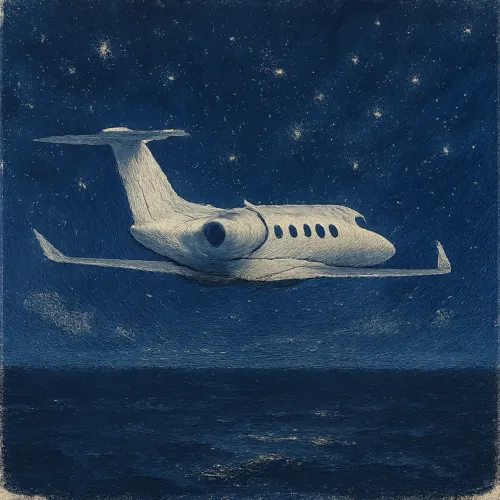
Inside, the faint gleam of a jet waited, its fuselage matte grey, engines silent.
Reina stepped out of the car, stretching her arms. “We’ll rest here until midnight, then take off. Valerie’s prepping the flight plan.”
Naomi joined her, her breath curling white in the night chill. She looked toward Elias across the distance between the cars, her expression unreadable—some mix of fatigue and thought.
He gave a small nod. She returned it, then turned to help Reina with the equipment.
Marcus and Julian began unloading duffels from the back seat. The sound of zippers, the metallic clang of crates, the scrape of metal on the cement floor filled the air.
Elias lingered outside a moment longer, watching the fog lift from the runways.
It had been barely four days since the gala. Four days since marble floors and champagne had turned to bullets and blood. Now here they were, a lifetime away from everything he’d once called his reality.
And somehow, he didn’t miss it.
He rubbed the ache in his arm, feeling the throbbing pulse beneath the bandage. The wound would heal. The rest—the uncertainty, the whirlwind of unanswered questions in his mind, the growing weight of whatever he’d stepped into—would take longer.
Inside the hangar, Reina’s voice carried: “Elias! Get some rest. We’ve got a long journey ahead.”
He turned toward her, the corners of his mouth lifting faintly. “Yeah. Just a minute.”
The sky over Toronto remained a deep, starless black, the distant city beneath it burning with a cold light.
Elias took one last look at the horizon, then stepped inside to join the others.
The thrum of the aircraft softened into a steady rhythm, a sound that reminded Elias of the steady, quiet passing of sand through an hourglass.
They had taken off at midnight. The muted glow of cabin lights painted everything in amber and shadow. They flew past the clouds, which had thinned far below into soft veils of silver. Above them, the sky was a deep, velvet black, spilling open to reveal the impossible brilliance of the stars. They were no longer scattered points, but a vast, cold expanse of light that filled the middle of the sky. Below them, dawn was somewhere waiting over the Atlantic.
He glanced across the aisle, expecting to find Naomi in her seat, but it was empty. A faint movement near the cockpit door caught his eye—her dark form framed by the galley light. She was speaking quietly with Reina, her expression unreadable. When she noticed him stir, she said something to Reina and started toward him.
“Hey,” she said softly, stopping by his seat. “Do you have a minute?”
Elias nodded. She gestured toward the rear of the plane, where two empty seats faced each other near a small table. Away from the others, the noise of the engines became a distant pulse, a curtain between them and the world. Naomi sat first, clasping her hands for a moment before speaking.
“I didn’t thank you,” she said finally. “For saving my life.”
He gave a tired half-smile. “Pretty sure you did that yourself.”
“Not the way you think.” She looked down at her hands. “If you hadn’t pulled me out of that car, I wouldn’t be sitting here now. No one’s done something like that for me in a long time.”
He shrugged, uncomfortable with the weight of her gratitude. “You’d have done the same.”
“Yes,” she said quietly, “but that’s not the point.”
Silence again. She seemed to be measuring her next words, as if deciding whether to cross a line. Then she drew a long breath, settling her gaze fully upon him.
“There’s something you deserve to know.”
Elias met her gaze. “About what happened in the car?”
“About everything,” she said. “But before I start… I need you to promise me you’ll listen. No interruptions. Just—keep your mind open.”
He studied her face—the seriousness there, the faint tension at the corners of her mouth. “You’re making it sound like a confession.”
“In a way, it is.”
He nodded once. “All right. I’m listening.”
Naomi sat back, folding her arms loosely across her chest. Her voice when she spoke again was steady, but there was a note of something older in it—like she was repeating words she’d carried for years.
“What I’m about to tell you… I wasn’t supposed to. The Order has rules about this—what we can reveal, when we can speak of it. But after everything we’ve been through, after Boston, after that road… you’ve earned the truth, or at least the part I can give.”
Elias said nothing.
She took a breath. “You already know that not everyone gets a second chance at life. People die, and they stay dead. But some—very few—return. They come back different, carrying pieces of memories that shouldn’t belong to them.”
“Reincarnation,” he said under his breath.
“Yes,” she replied, “but not the way you think. Those souls… they were never entirely human. Long before this world was divided by time and kingdoms, there were others. Angels, sent to earth—not as messengers, but as punishment. They had broken laws older than language, defied a will greater than their own. Their sentence was to live as mortals, to forget what they were, and to keep being reborn until they repent of their sins.”
Her words settled between them like dust in light.
Elias exhaled slowly. “You’re saying the reincarnated are—angels.”
“Fallen angels,” she corrected softly. “Condemned to walk the earth as men and women.”
Elias could only stare, the hum of the jet engines filling the silence.
“Over the ages,” Naomi went on, “a few began to remember. Flashes at first—dreams, fragments, instincts that couldn’t be explained. And when they remembered enough, something changed in them.”
“What changed?”
“Power returned in fragments,” she said. “Sight, strength, healing, the ability to see the threads between worlds.”
“So did they become immortal?” Elias asked.
“No. Even when awakened,” she replied, “they were still bound to mortal flesh. They lived longer, healed faster, but they still died. And when they did, the cycle began again.”
He tried to read whether she believed it herself. But her expression was calm, unwavering.
“Over time,” she continued, “these awakened ones found each other and formed the first Orders. One in Sumer, another in Egypt, others scattered across continents. They taught, they built, they protected. Civilizations rose around their knowledge.” She let that settle for a beat. “That’s why there are echoes all around the world—the pyramids, the temples, the stone circles. Different lands, but same hands guiding them.”
Elias let out a low laugh—half disbelief, half fatigue. “You realize how that sounds?”
“Yes.” She looked at him, eyes steady. “And I also know you’ve seen enough by now to stop calling things impossible.”
He looked away, jaw tight. “Then where do you fit into all this?”
She hesitated, fingers tightening around the edge of her chair. “My mother is one of them—one of the fallen angels who remembered their past.”
Elias frowned. “Half-angel.”
“Nephilim,” she said quietly. “A bridge between what was and what is.”
He said nothing for a long moment. The steady drone of the aircraft filled the space between her words.
“And that’s why you healed,” he said finally.
She nodded. “It's in my blood, a fragment of their grace. Wounds close faster. Time moves differently.”
He studied her face—the smooth skin, the ageless calm that had always seemed unnatural. “You said once you were older than you looked.”
“I did.”
“Older than thirty?”
A small smile curved her mouth. “Forty-five.”
He leaned back, staring at the smooth, curved ceiling as if it might help him think. The muted air vents continued their soft thrum.
“Forty-five,” he repeated softly. “You look twenty.”
“I age slower. It’s part of what I am.”
He laughed once, dryly. “And I thought Clara calling me an old soul was dramatic.”
That earned him the ghost of a smile. But it faded quickly.
“You don’t have to believe me,” Naomi said. “I won’t blame you if you don’t. When my mother told me these things as a child, I thought they were stories. Myths to keep me from feeling alone. But the older I grew, the more I saw. The more I learned.”
Elias turned to her, his tone low. “Learned what?”
“That there are patterns everywhere,” she said. “People who dream the same places without ever meeting. Symbols that repeat across cultures with no shared language. The Order has spent centuries tracing those echoes—trying to understand what connects them, what it means when a soul begins to awaken. I’ve seen enough to know it’s real, even if I’ll never fully understand it.”
He rubbed his face with his good hand. “I was an atheist before all this.”
Naomi’s eyes softened. “I know.”
“I didn’t even believe there was anything after death. Then I met you, and suddenly angels are real, and I’m supposed to accept that God threw them out of heaven and let them rot here for eternity?”
She didn’t flinch. “You’re angry.”
“I’m—confused,” he said, voice rising. “If there’s a God who allows all this—war, death, suffering—then what kind of God is that?”
“I don’t know,” Naomi said simply. “Maybe He doesn’t watch. Maybe He can’t. Maybe that’s why we’re here.”
That silenced him.
She leaned forward slightly, elbows on her knees. “We don’t know the full story. None of us do. Even the ones who remember only have fragments. But whatever the truth is, it isn’t simple. It never was.”
Elias let out a long breath. “And the Order? They know all this?”
“They know parts. Enough to protect what remains of us. Enough to keep balance when they can.”
He nodded slowly, staring at the floor. “So what am I, then? Another fallen angel waiting to remember?”
Naomi didn’t answer right away. When she did, her voice was careful, almost tender. “That’s what the Elder will tell you.”
He looked up sharply. “Who is this Elder that you keep mentioning?”
“The one we’re going to see,” she said. “She leads the Order from Bhutan. She can tell you what I can’t.”
“And you’ve met her?”
Naomi’s expression softened. “Yes.”
He didn’t notice the flicker in her eyes—the trace of warmth, pride, and something deeper she hid before it could reach her voice.
For a long while, neither spoke. The world outside remained a calm and embracing darkness, broken only by the sharp, ancient light of the cosmos above the plane. Elias leaned his head back, the exhaustion finally finding him again.
The hum of the engines blurred into a lullaby, and as he drifted into sleep, the last thing he heard was Naomi’s voice—a whisper caught somewhere between dream and prayer.
“Rest now, Elias. The hard part is still ahead.”